What’s the most overlooked nutrient in your diet? Fiber
When talking about healthy eating, the conversation often centers on calorie-cutting, trendy diets or balancing protein, carbs and fats. There’s rarely talk of a key nutrient that deserves more of the spotlight—fiber.
According to Atlantic Health registered dietitian Shannon Roque, RD, fiber is one of the most beneficial—yet under-consumed—carbohydrates in the American diet.
“The benefits of fiber go far beyond nutrition and digestion,” says Shannon. “The fullness factor you get from eating fibrous foods helps with weight management and appetite control. When you eat fiber, you feel full and satisfied much longer.”
And the benefits don’t stop there. Diets that are rich in fiber also help improve heart health, blood sugar and insulin levels and may lower your risk of Type 2 diabetes and certain cancers.
What is fiber?
Fiber is the part of plant foods that the body doesn’t digest easily. It’s the skin on an apple. It’s the strings of celery stalks. When you consume these fibrous foods, they pass through your digestive system intact and in two essential forms:
- Soluble fiber dissolves in water and helps lower cholesterol and regulate blood sugar.
- Insoluble fiber maintains its structure in water, which supports gut health and keeps the digestive system moving.
How much fiber should you eat?
Fiber guidelines vary for men, women and children, and the recommendations are higher than most people realize:
- Women: 25 grams per day
- Men: 38 grams per day
- Children: 19 to 28 grams per day, depending on age and gender
What are high-fiber foods?
Fruits
- Apples (with skin)
- Berries
- Pears
- Avocados
Vegetables
- Broccoli
- Artichokes
- Brussels sprouts
- Sweet potatoes (with skin)
Whole grains
- Oats
- Brown rice
- Quinoa
- Farro
Legumes
- Lentils
- Black beans
- Chickpeas
- Kidney beans
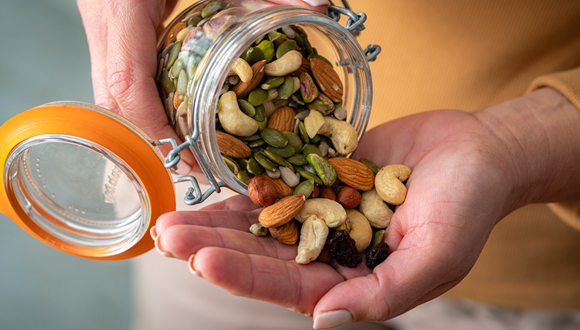
Nuts and seeds
- Chia seeds
- Flaxseeds
- Almonds
- Pumpkin seeds
Simple ways to eat more fiber
“Toss farro into soups, add beans to salads, work berries and seeds into breakfast,” Shannon says, “and eat real fruit instead of drinking fruit juice. Fiber is in the skin and membranes of fruit, not the liquid. An actual orange beats orange juice every time.”
Supplements can also support fiber intake, as long as there are no added sugars or artificial ingredients. And they shouldn’t replace a balanced diet of real fruits, vegetables, whole grains and legumes.
Here are a few other fiber-boosting tips:
- Start your day with fiber. Topping oatmeal or yogurt with berries or seeds helps meet your daily goal.
- Choose whole-grain bread, pasta or rice and look for at least three grams of fiber per serving on the nutrition label.
- Add beans and lentils wherever you can. Toss them into soups, salads, grain bowls, whole grains and roasted veggies.
- Choose fiber-rich snacks such as nuts, fresh fruit and air-popped popcorn.
Shannon cautions, “When you add fiber to your diet, do it gradually and drink plenty of water. Too much fiber too quickly—especially without enough fluids—can lead to bloating, discomfort and constipation. Small, incremental changes lead to big differences over time.”
Related news articles


